Since its creation in Saint Martin, Winair has supported the development of regional air transport, connecting islands and communities across the Caribbean. Driven by bold pioneers, dedicated teams, and a constant ability to reinvent itself, the airline has overcome challenges to become a key player in the Caribbean skies.
On August 24, 1961, a new chapter in air transport began in the northeastern Caribbean: Windward Islands Airway, better known as Winair, was founded in Saint Martin. At the time, the southern part of the island was one of five territories of the Netherlands Antilles. This institutional framework would later evolve, as the island’s status changed in 2010 to become a constituent country within the Kingdom of the Netherlands.
The Pioneer Era
Until 1946, Saint Martin relied entirely on maritime transport for passengers, mail, and cargo. Gradually, pioneering pilots opened the way by operating the first air connections to neighboring islands. It would take more than a decade, however, for entrepreneurs to fully recognize the potential of establishing a structured, regular air service from Saint Martin.
One of these pioneers was George Gréaux, originally from Saint Barthélemy, located about 30 kilometers southeast of Saint Martin. Flying a Cessna purchased by his father, he established regular routes across the northeastern Caribbean. At the same time, another native of Saint Barthélemy, Hippolyte Ledée, was also developing air services between several islands in the region.
In 1960, Hurricane Donna disrupted their operations, severely damaging their aircraft. This marked a turning point: the two men joined forces and founded Gréaux and Ledée Air Services, GLAS.
The Birth of Winair
The success of GLAS quickly encouraged George Gréaux and Hippolyte Ledée to take the next step. They began discussions with Norman “Chester” Wathey on expanding air services in the region. It was ultimately at the Lido, a well-known bar in Philipsburg, the capital of Saint Martin, that the three entrepreneurs sealed their agreement and decided to launch Winair. Soon after, the young airline introduced itself with a clear promise: “the ideal airline for island-to-island travel.”
From its earliest years, Winair steadily expanded its network, connecting Saint Barth, Saint Thomas, Saint Kitts, Anguilla, Guadeloupe, and Statia. On September 18, 1963, the airline marked an important milestone by operating its inaugural flight to Saba, becoming the first and only airline to provide regular service to the island. To serve the particularly short runways of Saba and Saint Barthélemy, Winair needed aircraft capable of short take-offs and landings, known as STOL. The company began operations with the Dornier Do-28, ideally suited to these conditions.
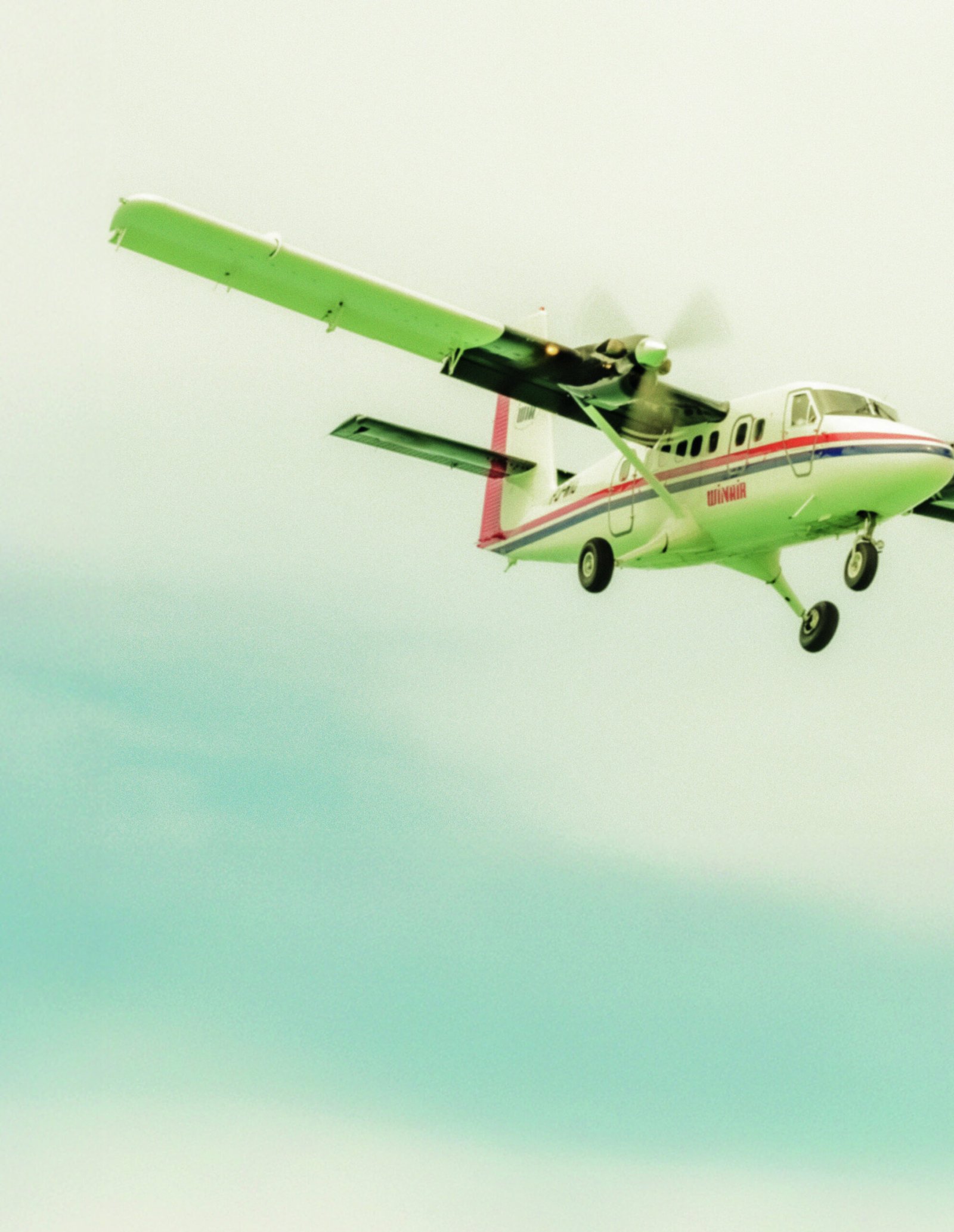
In 1965, the group acquired what would become the airline’s iconic aircraft, the de Havilland Canada DHC-6 Twin Otter. George Gréaux vividly recalls his impression of the aircraft at a Paris Air Show. “I knew this was the perfect aircraft for our airline. I didn’t hesitate and signed on the spot.”
A Man at the Heart of the Story
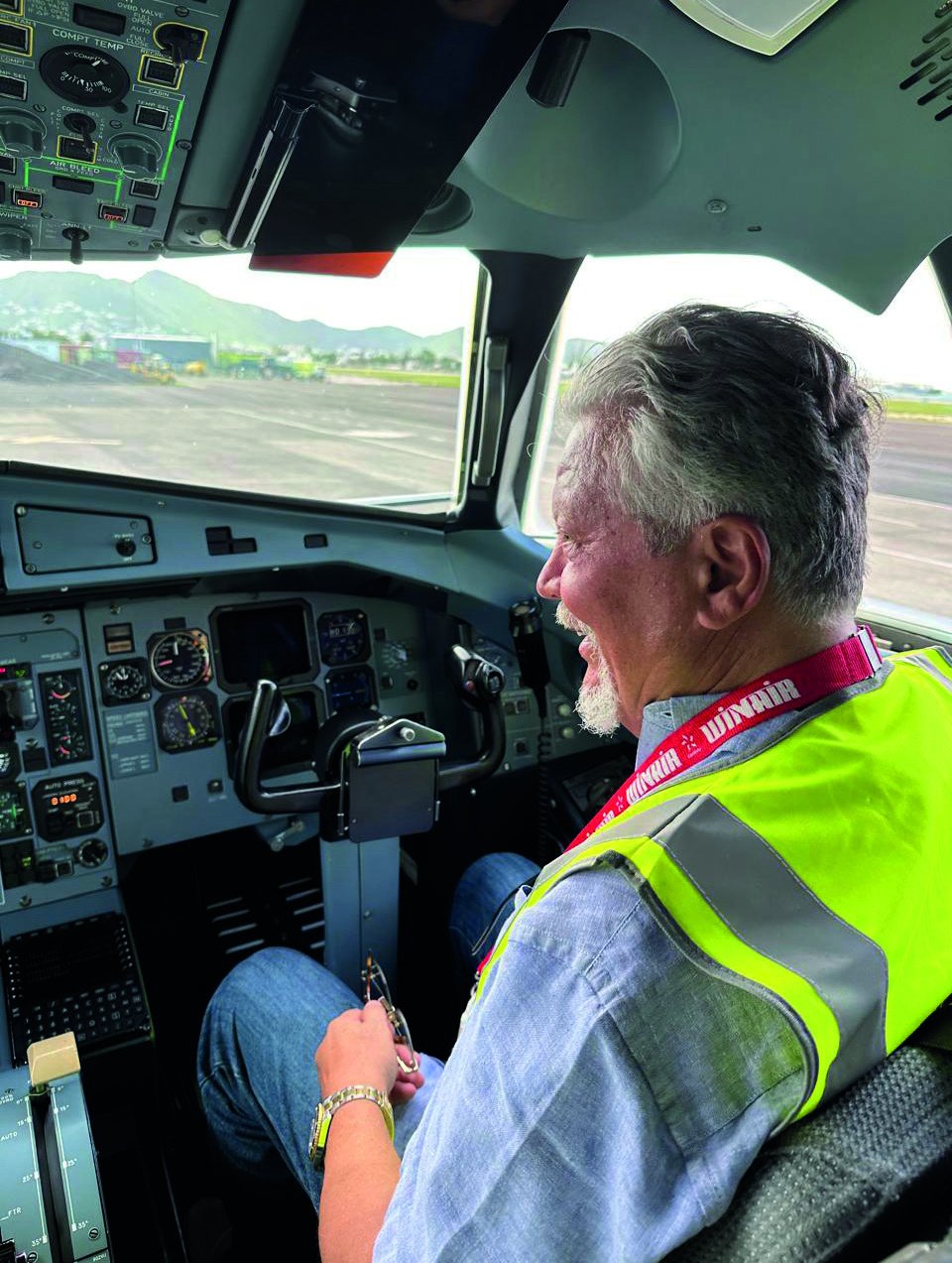
Captain Pipe, the affectionate nickname given to Jose Dormoy, was the airline’s first full-time pilot. Over the years, he averaged 150 flight hours per month, reaching an impressive total of 37,000 hours, including 18,000 on Twin Otters.
His expertise made him, at the time, the only pilot trusted by Queen Juliana of the Netherlands, and later Queen Beatrix, to fly to Saba. Queen Juliana awarded him the Order of Orange- Nassau, a rare honor typically reserved for Dutch nationals, even though Captain Pipe was French. A distinction no one could dispute, given the many lives he saved throughout his career, always ready to respond, day or night, in emergency situations.
Growth and Structuring
In the 1970s, Winair expanded its regional network, operating a Fokker Fairchild F-27 to San Juan, Guadeloupe, Martinique, and Saint Lucia. At the time, flights to San Juan were particularly successful, as the city served as a major hub for American Airlines, connecting the United States with the rest of the Caribbean. This continued until 1974, when the Middle East war, rising fuel prices, and the introduction of direct flights from the United States to Saint Martin and other destinations made the San Juan route less relevant.
In 1976, the government of the Netherlands Antilles recognized the need to ensure reliable air service between the islands, and Winair transitioned from private ownership to government control.
In the years that followed, Winair faced challenging periods but consistently managed to recover. In the 1980s, the airline focused on developing partnerships and service- sharing agreements, benefiting passengers.
One constant throughout Winair’s history has been the dedication, passion, and pride of its employees. Every challenge has been met with resilience, adaptability has been key, and giving up has never been an option.
Opening Up and Recognition
In 2010, Winair’s shareholding was divided between Saint Martin, holding 92%, and the Netherlands, with 8%. The Prime Minister appointed an ad hoc committee to assess the company’s situation and provide recommendations for its future viability.
A year later, new statutes were adopted, followed by the appointment of a supervisory board and a new management team. At that time, flights from Princess Juliana International Airport served Saba, Statia, Saint Barthélemy, and Saint Kitts and Nevis.
In 2014, Winair reached an important milestone by signing a code-share agreement with Air France, followed in 2017 by a similar agreement with KLM. A notable achievement for an airline of its size, reflecting the determination and commitment of its teams to ensure safe and reliable air transport, having successfully met strict requirements and rigorous audits.
On November 11, 2015, during the commemoration of the Armistice of the First World War, the Collectivity of Saint Barthélemy organized a ceremony to honor aviation pioneers who contributed to the island’s development. Among them were José Dormoy, Rémy de Haenen, Captain Faustin Ledée, the first native of Saint Barthélemy to obtain a pilot’s license, and George Gréaux, visionary founding member of Windward Islands Airways. They were all honored in the opening speech by President Bruno Magras.
Continuity and Resilience
The year 2017 was marked by the devastation caused by Hurricanes Irma and Maria. Several destinations served were affected, as were the airline’s offices and Princess Juliana International Airport. Despite the scale of the damage, Winair managed to recover quickly. From the midst of the ruins, the airline resumed operations to most of its destinations in just eight weeks.
In the years that followed, Winair made a remarkable recovery, serving 16 destinations by 2019, including Antigua, Aruba, Bonaire, Curaçao, Dominica, Guadeloupe, Haiti, Nevis, Saba, San Juan, Santo Domingo, Saint Barthélemy, Statia, Saint Kitts, Saint Martin, and Tortola. When the COVID-19 pandemic brought the world and the aviation industry to a halt, the company observed innovation and creativity emerging everywhere. Despite ongoing challenges, it remained positive and looked to the future with hope, determination, and commitment.
With a fleet of five de Havilland Twin Otters and four ATR 42 aircraft, the airline now operates more than 25,000 flights and carries over 320,000 passengers each year.
No company reaches more than six decades without the support of its loyal customers. Winair expresses its deep gratitude for the trust placed in it over the years. This continued support drives the airline to keep striving to deliver a high-quality travel experience across the Caribbean, with a constant focus on safety and reliability.
Art Issue #17 EN